


In children’s growing memories, a pair of brightly colored, cute sunglasses is often a symbol of joy at the beach or outdoor adventures in summer. In recent years, children’s sunglasses have undergone a transformation from “toys” to “professional sun protection gear.” Understanding this evolution and mastering the key points of selection can help parents and brands better meet children’s needs.
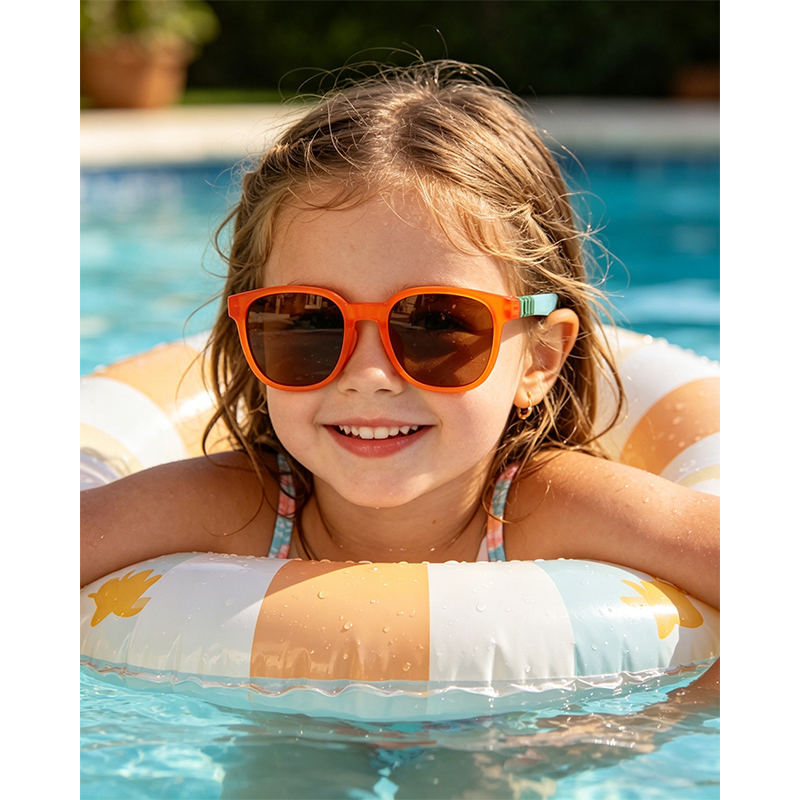
I. The Popularity History of Children’s Sunglasses in Recent Years
2018-2020: The “Toy-like” Stage Dominated by Cartoon IPs. The market was flooded with sunglasses featuring cartoon characters such as Disney and Peppa Pig. At this time, parents mainly focused on “appearance,” and the lens material was mostly ordinary plastic, with varying levels of sun protection and impact resistance. The shapes were mainly round and square, with extremely high color saturation.
2021-2023: Awakening of Safety and Functional Awareness. With the rise of outdoor parent-child sports (camping, cycling), parents began to value UV protection and impact resistance. PC polarized lenses and TR90 flexible frames gradually became popular, and wraparound sports styles became a hot trend. The designs balance cuteness and practicality, featuring adjustable headbands and food-grade silicone materials.
2024-2026: Fashionable and Suitable for All Scenarios. Children’s sunglasses designs are becoming more diverse: retro cat-eye, gradient lenses, and transparent jelly frames are among the trendy elements entering the children’s eyewear market. At the same time, age-appropriate designs are becoming more refined (soft-strapped styles for 0-3 years, lightweight TR90 styles for 4-7 years, and polarized sports styles for teenagers 8 years and older). Environmental protection concepts are also beginning to permeate the market, with some brands using bio-based sheets or recycled materials.
II. Four Important Considerations When Buying Children’s Sunglasses
Look for UV400: Must block 100% of ultraviolet rays to protect the child’s developing lens.
Impact-resistant lenses: PC polycarbonate lenses are preferred; they won’t break upon impact, preventing eye injuries from shards.
Rounded and flexible frames: No sharp corners; TR90 or silicone materials are best. One-piece molded nose pads and flexible, unbreakable temples.
Proper Size: The sunglasses should not pinch the temples or press against the bridge of the nose after trying them on. The frame should cover the area around the eyes without obstructing peripheral vision. For preschool children, a headband-style design is recommended to prevent them from slipping off.
III. What Kind of Sunglasses Do Children Like?
Based on child psychology and consumer observations, children prefer the following elements:
Bright and Vibrant Colors: Fluorescent pink, lemon yellow, and sky blue—these “dopamine colors” are most popular.
Cartoon Designs and Frame Details: Frames with bear ears, star decorations, or cartoon characters on the temples will make them irresistible to children.
Playful Designs: Sets that include interchangeable temples, stickers, or a storage box, as well as small toys with polarization test cards, increase fun.
Following Idols’ Styles: Older children start to seek styles similar to cartoon characters or sports stars, such as racing or sci-fi styles.
We—Your Professional Children’s Eyewear Customization Partner
We have hundreds of children’s sunglasses covering all ages from 0-12, from soft silicone frames to TR90 polarized sports styles. We support small-batch in-stock purchases for quick trial sales, and also undertake large-volume OEM/ODM customization. We can print your brand logo (laser printing, silkscreen printing, metal label) and provide personalized eyeglass cases, eyeglass bags, and microfiber cleaning cloths to create a unique brand image.
Let’s work together to bring children a safe and stylish outdoor visual companion! Samples and customized solutions are welcome.
Post time: Apr-24-2026