


The distinction between sports sunglasses and everyday eyewear lies not in their appearance, but in a comprehensive technical framework built around “visual safety during physical activity.” Grasping this logic is the essential first step for any brand looking to enter the outdoor and sports market.
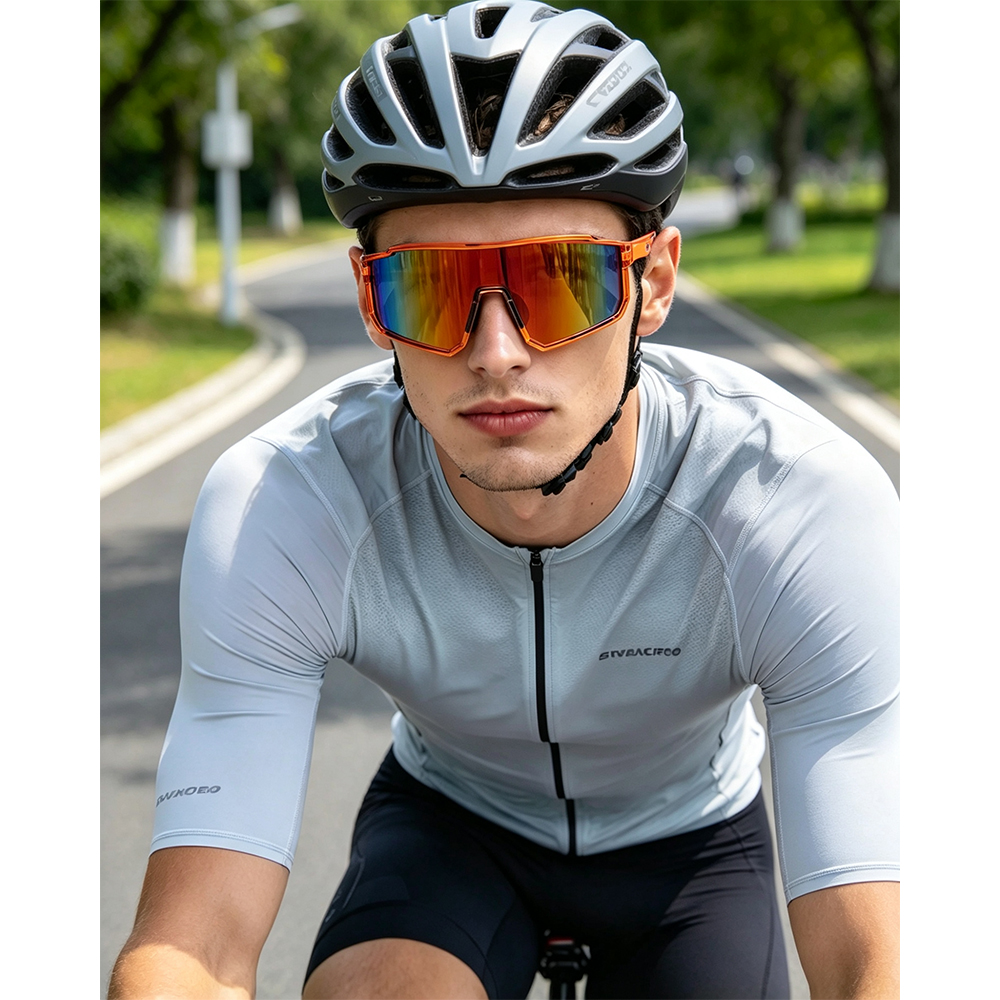
The First Line of Defense: Impact-Resistant Materials. In sporting environments, flying debris, tree branches, or accidental collisions pose a risk to the eyes. Lenses for sports sunglasses must be crafted from polycarbonate (PC)—a material with over ten times the impact resistance of standard resin, ensuring they neither shatter nor splinter upon impact. For frames, TR90 (a thermoplastic material) is the preferred choice; it is approximately 30% lighter than conventional frame materials, highly flexible, and resistant to breakage even during intense physical activity. These material standards represent the baseline that separates sports sunglasses from ordinary eyewear—a non-negotiable entry threshold for any brand’s product selection.
Stability-Focused Design: Staying Put Matters More Than Aesthetics. Sports sunglasses typically feature a wrap-around design that contours to the face. Combined with adjustable silicone nose pads and anti-slip temple tips, they remain securely in place even during high-speed movement. Ventilation is equally critical: integrated air channels in the frame promote airflow, preventing lens fogging and ensuring a clear field of vision. While these details may seem minor, they are fundamental to the overall athletic experience.
Functional Upgrades: Polarized and Photochromic Lenses as Drivers of Premium Value. During activities like cycling, running, or fishing, glare reflected off roads or water surfaces can severely impair visual judgment. Polarized lenses selectively filter out scattered light, enhancing contrast and safety. Photochromic lenses automatically adjust their tint based on UV intensity, adapting to shifting weather and lighting conditions—offering an “all-day, all-weather” solution. These features are the primary drivers of the premium pricing commanded by sports sunglasses and represent the specific upgrades for which consumers are most willing to pay.
Market segmentation by activity is accelerating. Different activities—such as road cycling, mountain biking, water sports, and skiing—each demand specific lens light transmission, color tinting, and frame geometry. Establishing professional credibility within these niche segments offers greater long-term value than competing on price in the mass market.
As an export-oriented company specializing in custom eyewear, we offer a comprehensive product range—including sports sunglasses, polarized eyewear, and frames made from materials like TR90 and acetate—all aligned with the latest outdoor sports trends. We provide an extensive selection of in-stock items to support small-batch orders for rapid product testing, alongside large-scale OEM/ODM customization services. From precise logo application on temples (via laser engraving, screen printing, or metal emblems) to complete branded packaging (cases, pouches, and cleaning cloths), we offer a one-stop solution to help your brand enter the sports eyewear market. Please contact us for product selection advice and customized solutions.
Post time: Nov-09-2026