


In the functional landscape of eyewear, night vision lenses hold a mysterious allure. They serve as both a “safety guardian” for nighttime drivers and a “visual assistant” for outdoor enthusiasts. For eyewear export brands aiming for the global market, understanding the scientific principles, color selection logic, and applicable scenarios of night vision lenses is fundamental to expanding into this specialized market segment.
I. What are Night Vision Lenses?
Night vision lenses are a concept that is easily confused. From a strict technical definition, true “night vision goggles” are auxiliary observation tools based on photoelectric imaging technology, capable of converting weak light or infrared radiation into visible light under extremely low light conditions. These devices typically include complex components such as objective lenses, image intensifiers, and power supplies, and are widely used in fields such as military reconnaissance and security monitoring.
However, in the civilian market, the “night vision glasses” or “driver’s night vision goggles” we often refer to are functional glasses with special optical designs that help users improve visual comfort and clarity in nighttime or low-light environments. The core functions of these glasses include: filtering the glare from oncoming headlights, enhancing contrast in low-light conditions, and reducing visual fatigue while driving at night.
II. Why are night vision lenses mostly yellow?
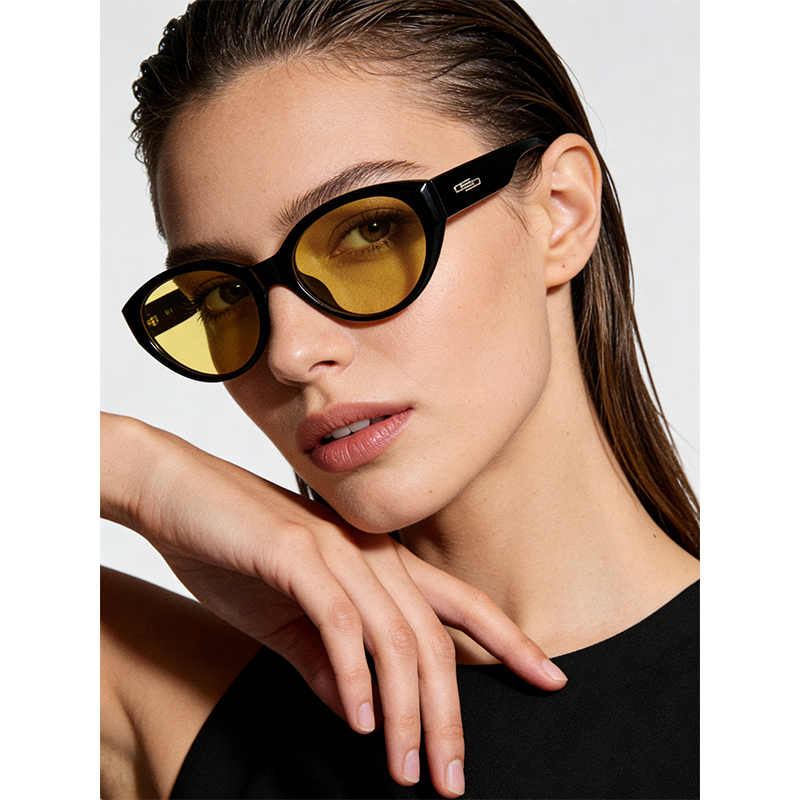
Most civilian night vision glasses on the market use yellow lenses, which is supported by optical principles. Yellow lenses selectively filter blue light—the main component of oncoming headlights that easily causes glare when meeting other vehicles at night. By reducing the amount of this light entering the eye, glare is effectively reduced while maintaining the transmittance of other light.
However, this principle is controversial in practice. Research from Harvard Medical School shows that yellow lenses do not actually improve the speed of object recognition at night. Compared to people wearing regular glasses, people wearing yellow-lensed glasses do not notice pedestrians faster. Researchers point out that tinted lenses, whether yellow, red, or blue, filter out some light; wearing such glasses while driving at night feels similar to wearing sunglasses, and may actually reduce visibility.
Therefore, professional advice indicates that qualified night vision driving glasses should “block strong light while ensuring clear road vision,” meaning they should block more than 80% of the glare from oncoming vehicles, while the main lens’s light transmittance must be greater than 75% to ensure unimpeded road observation. When purchasing, choose reputable products with sufficient light transmittance and reliable quality.
III. Usage Scenarios for Night Vision Glasses
Civilian night vision glasses are mainly used in the following scenarios:
Night Driving: This is the primary application scenario. Insufficient light at night causes pupil dilation, making the eyes more sensitive to strong light. Qualified night vision glasses can effectively filter the glare from oncoming vehicle headlights while ensuring clear visibility of road details. For drivers with presbyopia, progressive multifocal glasses can also be considered to address the transition between viewing the road and the dashboard at different distances.
Driving in Fog and Rain: Yellow lenses have a certain contrast-enhancing effect, helping drivers to more clearly identify the road surface and obstacles in adverse weather conditions.
Nighttime Outdoor Activities: For activities like nighttime walks, stargazing, and photography, suitable night vision glasses can improve visual comfort and reduce eye strain caused by changes in ambient light.
It’s important to note that ordinary sunglasses or photochromic lenses are unsuitable for nighttime wear due to insufficient light transmittance (national standards require night driving glasses to have a light transmittance >75%). When purchasing, choose neutral-colored lenses such as gray or brown to avoid visual distortion.
IV. Us – Your Professional Eyewear Customization Partner Facing the diverse needs of the functional eyewear market, choosing the right partner is crucial.
Extensive Product Portfolio: We have a vast library of styles covering all categories, including driving glasses, polarized lenses, and photochromic lenses, to meet the needs of different usage scenarios. Whether it’s small-batch spot purchasing for rapid market validation or large-scale custom design for creating your own brand, we can provide agile and reliable supply chain support.
In-depth Brand Customization Services: We are committed to helping you create a complete brand experience. From the intricate logo engraving on the temples to a complete brand packaging solution perfectly matching the product style (including eco-friendly eyeglass cases, carrying bags, and professional cleaning cloths), we ensure your brand philosophy is accurately conveyed at every touchpoint.
The darkness should not be an obstacle to vision, but rather a starting point for exploration. Choose us, and let’s work together to integrate optical technology into everyday functional eyewear, creating safer and more comfortable nighttime vision gear for users worldwide.
Post time: Feb-28-2026